


product key technologies
Definition and basic characteristics
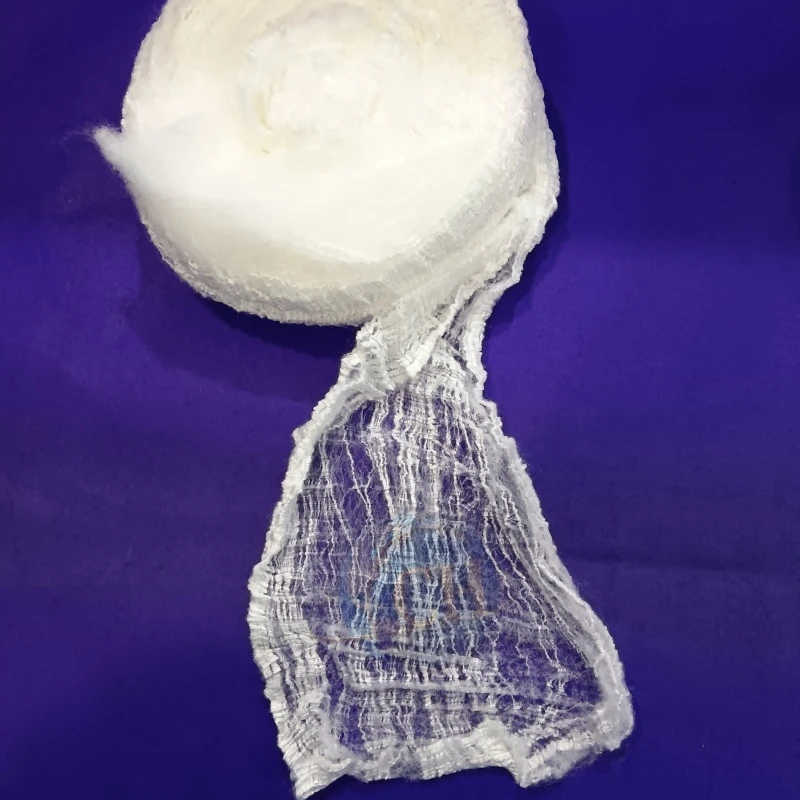
Acetate tow (Cellulose Acetate Tow), also known as diacetate tow, is a regenerated cellulose fiber produced by acetylation reaction using natural cellulose (usually derived from wood pulp or cotton pulp) as raw material. Its main component is cellulose diacetate, which has the following core characteristics:
Combination of natural and synthetic: It not only retains the biodegradability of natural cellulose, but also gives it hydrophobicity, thermoplasticity and high strength through chemical modification.
Appearance and touch: The fiber surface is smooth, the cross-section is a special-shaped structure, the gloss is high, the hand feel is soft and elastic.
Chemical stability: It is resistant to weak acids and alkalis, insoluble in water but soluble in organic solvents such as acetone, and has little residue and no droplets after burning.
Environmental properties: The raw materials are renewable, the production process is low-toxic and low-pollution, and it can be partially biodegraded after disposal.
Product Specifications and Technical Parameters
The specifications of acetate fiber tow are usually defined by the following parameters:
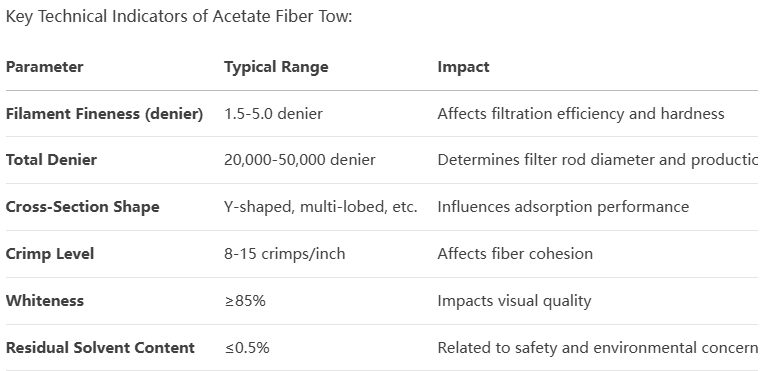
Single filament denier: range 1.5-5.0, common specifications are 3.0/3.3/3.8, etc. The smaller the value, the finer the fiber.
Total denier of tow: usually 20,000-50,000 denier, reflecting the overall thickness of the tow.
Cross-sectional shape: Y-shaped, cross-shaped and other special-shaped structures, affecting the specific surface area and filtration performance.
Plasticizer content: Triacetin is usually added to enhance flexibility and processability
Production process
Raw material preparation
Cellulose purification: Wood pulp or cotton pulp is bleached and treated with alkali to remove lignin and impurities to obtain high-purity α-cellulose.
Acetylation reaction: Under the action of sulfuric acid catalyst, cellulose reacts with acetic anhydride to produce cellulose diacetate.
Precipitation and maturation: The degree of substitution (DS value 2.2-2.7) is controlled by hydrolysis to form cellulose acetate sheets with good spinnability.
Spinning molding
Dry spinning: The cellulose acetate solution dissolved in acetone is extruded through the spinneret, and the solvent is volatilized through the high-temperature channel to form continuous filaments.
Bundling and winding: The monofilaments are bundled into bundles through guide rollers and wound into cylindrical semi-finished products.
Post-processing process
Plasticization treatment: impregnation with triacetin (content 6-12%) to improve the flexibility and looseness of the yarn bundle.
Drying and shaping: control the temperature and humidity to make the plasticizer evenly distributed to avoid agglomeration.
Slitting and packaging: slitting into specific widths and weights according to customer requirements, and vacuum packaging to prevent moisture.
Core performance advantages
Physical properties
High specific surface area: The special-shaped cross-section and porous structure provide excellent adsorption capacity, suitable for filtration.
Low hygroscopicity: The moisture regain is only 6-7%, which is much lower than cotton fiber (8.5%), and has good stability in humid environments.
Thermoadhesiveness: It softens when heated to 180-220℃, and can be bonded without glue by hot pressing.
Chemical properties
Resistant to organic solvents: Good resistance to oil, alcohol, etc., suitable for medical and food contact scenarios.
Antimicrobial: Smooth surface, not easy to breed bacteria, passed FDA and other hygiene certifications.
Processing adaptability
High-speed opening: The tow is easily dispersed into a single fiber state in the opening machine, and has high composite efficiency with paper and non-woven fabrics.
Strong plasticity: It can adapt to different processing temperatures (160-250℃) by adjusting the plasticizer content.
Main application areas
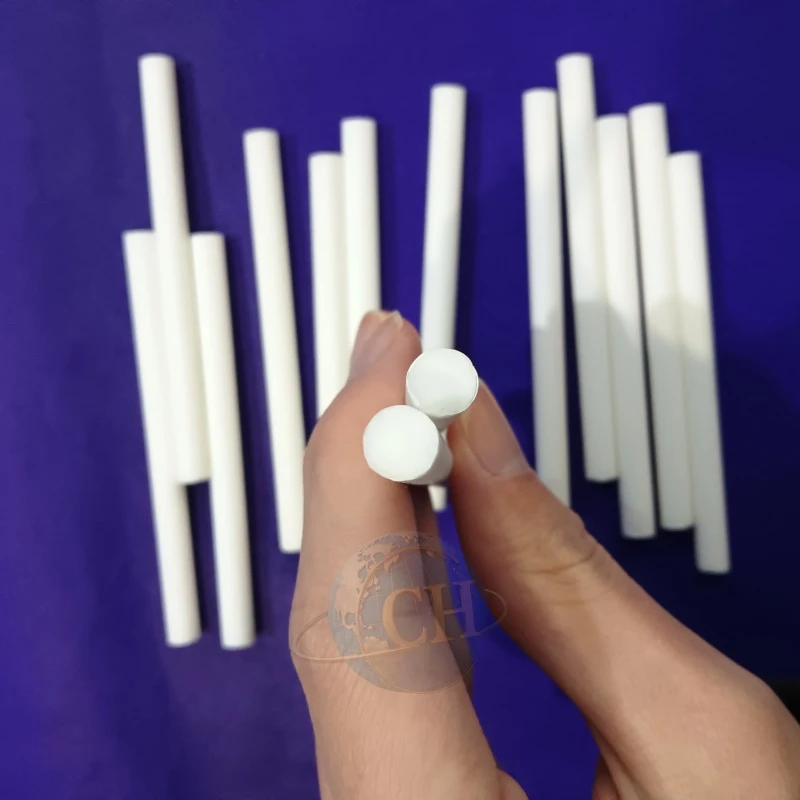
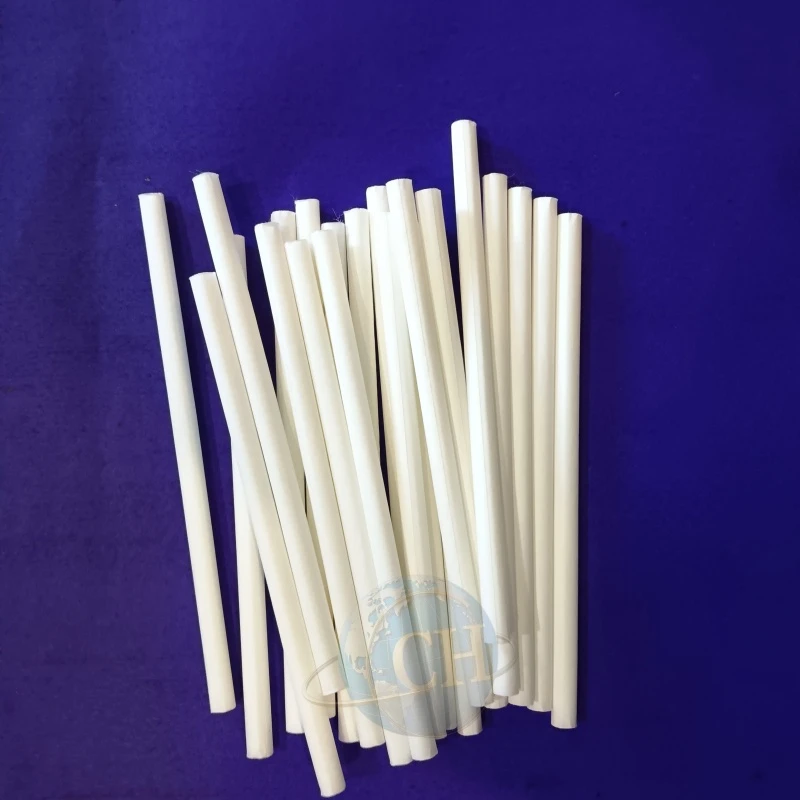
Cigarette filters: More than 80% of the world's acetate tow is used to make filter rods.
High-end clothing: Blended with cotton and silk to enhance fabric gloss and wrinkle resistance, used in dresses, shirts, etc.
Medical dressings: Use antimicrobial properties to create wound contact layers to promote healing.
Air filter: captures PM2.5, pollen and other particulate matter, used in automobiles and air conditioning systems.
Liquid filtration: chemical corrosion resistance is suitable for oil-water separation and pharmaceutical purification.
Optical film: High transmittance is used for polarizer substrate of liquid crystal display.

Hot Tags: 4.0yhigh-quality acetate tow, China 4.0yhigh-quality acetate tow manufacturers, suppliers, factory, environmentally friendly acetate tow, bleached acetate tow, Cigarette Filter Tow, smooth acetate tow, acetate tow for knitting, 3 0Y28000 acetate tow