


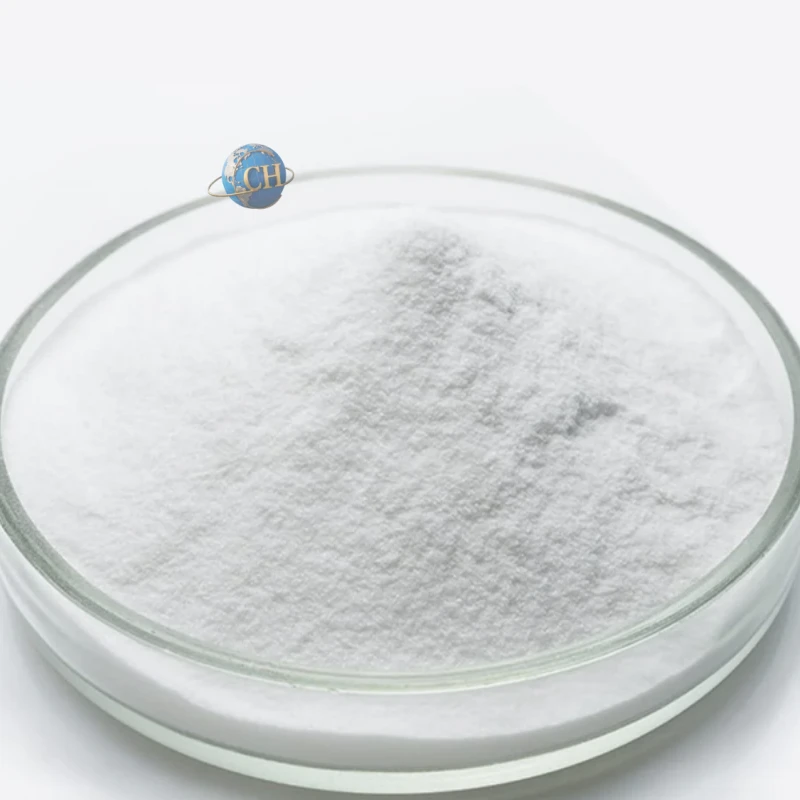
Carboxymethyl Cellulose (CMC) is an anionic water-soluble cellulose ether made from natural cellulose through alkalization and etherification reactions. The hydroxyl groups in its molecular structure are replaced by carboxymethyl groups, giving it excellent thickening, water retention, adhesion and film-forming properties. CMC can be divided into industrial grade, food grade and pharmaceutical grade according to the degree of substitution (DS) and purity, and is widely used in many fields such as food, daily chemicals, medicine, petroleum, textiles, etc.
Production process and technology
Alkalization stage: The cellulose raw material (usually wood pulp or cotton linters) reacts with sodium hydroxide solution to produce alkali cellulose. The key to this step is to control the concentration of alkali solution and the reaction temperature to ensure that the cellulose is fully swollen and improve the uniformity of the subsequent etherification reaction.
Etherification stage: Alkali cellulose is etherified with chloroacetic acid or its sodium salt to introduce carboxymethyl groups. Reaction conditions (such as temperature, time, and amount of etherifying agent) directly affect the degree of substitution and purity of the product. Solvent method or dry process is usually used in industrial production, among which solvent method (such as isopropanol-water system) can improve reaction efficiency and reduce the generation of by-products.
Post-processing stage: After the reaction is completed, neutralization, washing, drying and crushing are required to remove residual salts and by-products to obtain CMC products that meet the standards. High-purity CMC (such as pharmaceutical grade) also requires additional purification steps such as ion exchange or ultrafiltration.
Physicochemical properties
Solubility: CMC is easily soluble in water, forming a transparent or slightly turbid viscous solution. Its dissolution rate is affected by the degree of substitution, and products with a high degree of substitution (DS>0.8) have better solubility. It is insoluble in organic solvents (such as ethanol and acetone), but can tolerate a certain proportion of alcohol-water mixed system.
01
Rheology: CMC solution exhibits typical pseudoplastic fluid behavior, i.e. shear thinning properties. This property makes it excellent in applications requiring high shear (such as coatings and drilling fluids). The solution viscosity increases significantly with increasing concentration and molecular weight, and the pH value is most stable in the range of 6-9.
02
Stability: CMC is acid and alkali resistant (pH 3-10), but may hydrolyze or degrade under strong acid or alkali conditions. It has good thermal stability and can withstand high temperatures above 100°C in the short term, but long-term high temperatures will cause molecular chain breakage.
03
Film-forming property: CMC can form flexible, transparent films with good oxygen barrier properties and biodegradability, and is suitable for packaging materials and pharmaceutical excipients.
04
Application Areas
Food industry: CMC is widely used as a food additive (E466) in ice cream, yogurt, sauces and other products to provide thickening, stabilization and water retention. In fruit juice drinks, it can effectively prevent pulp precipitation; in baked goods, it can improve the dough's gas retention and finished product texture.
Daily chemical industry: CMC is used as a binder in toothpaste to ensure the uniformity and extrudability of the paste; it is used as a thickener in shampoo and shower gel to improve the user experience; its film-forming property is used in cosmetics to make facial masks and skin care gels.
Pharmaceutical field: CMC is a common binder and disintegrant for tablets, which can control the drug release rate. In eye drops, it prolongs the drug residence time; in wound dressings, it provides a moist environment to promote healing.
Industrial applications: In oil drilling fluid, CMC adjusts rheology and reduces water loss; in ceramic glaze, it is used as a suspending agent to improve glazing uniformity; in textile printing and dyeing, it is used as a slurry to enhance fiber strength.

Hot Tags: carboxymethyl cellulose, China carboxymethyl cellulose manufacturers, suppliers, factory, Acetate Tow For Cigarette Filters, 99 99 Mercury Liquid, Silver Mercury, Cigarette Holder Acetic Acid Tow, 99 Mercury Liquid, Liquid Silver Mercury