Cellulose ꄲ Cellulose Knowledge ꄲ Differences between methylcellulose and hydroxymethylcellulose
Differences between methylcellulose and hydroxymethylcellulose
Methylcellulose (CMC) generally refers to the industry's abbreviation for sodium carboxymethylcellulose, which is a white or off-white fibrous or granular powder non-ionic cellulose ether, while hydroxymethylcellulose (HMC) is a polymer compound, so the two are different substances, which is reflected in their properties, alkali content, effects, uses, production processes, etc.
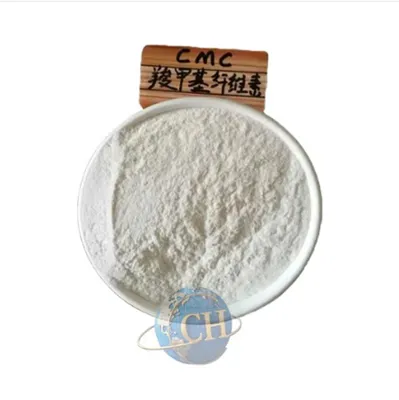

Methylcellulose, also known as sodium carboxymethylcellulose (CMC), is the sodium salt of cellulose carboxymethyl ether. It is an anionic cellulose ether and is a white or milky white fibrous powder with a density of 0.5-0.7 g/cm3. It is almost odorless and tasteless and has hygroscopicity. It is easily dispersed in water to form a transparent colloidal solution and is insoluble in organic solvents such as ethanol. The pH of a 1% aqueous solution is 6.5-8.5. When the pH is >10 or <5, the viscosity of the glue is significantly reduced, and the performance is better at pH=7. The viscosity rises rapidly below 20°C, changes slowly at 45°C, and long-term heating above 80°C can denature the colloid and significantly reduce the viscosity and performance. It is easily soluble in water and the solution is transparent. It is very stable in alkaline solution, but will precipitate when it is hydrolyzed by acid at a pH of 2-3, and will also react and precipitate when it encounters multivalent metal salts. It is mainly used in construction, ceramics, food, pharmaceuticals, batteries, papermaking, mining, coatings, washing, textile printing and dyeing, daily chemical toothpaste, oil drilling and other fields, playing the roles of thickener, water retaining agent, adhesive, lubricant, emulsifier, suspending agent, tablet matrix, biological product carrier, etc., and is known as the "industrial MSG".

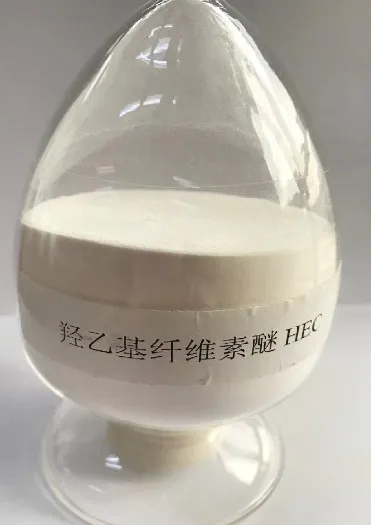
Hydroxymethyl cellulose (HMC) is a polymer compound, a white or slightly yellow fibrous powder or granule, soluble in water, alkaline aqueous solution, ammonia and cellulose solution, insoluble in organic solution and mineral oil, acts on water-oil and oil-water systems, and is used as a dispersant, foam stabilizer, emulsifier, and impurity reabsorbent in detergents; in the textile industry, it is used as a sizing agent\emulsifier stabilizer, anti-precipitation agent, and thickener, and a structural component in paper and paperboard production. It is a flotation agent for the selection of copper, nickel and potassium ores, an adhesive component for wallpaper, a component of dry building-cement mixture, and a thickening, dispersing, and stabilizing component in water-based latex paint.
Chemical properties of hydroxymethyl cellulose:
Substitution degree (or etherification degree): divided into high/medium/low
Solubility: high substitution degree (above 1.2)-soluble in organic solvents
Medium substitution degree (0.4-1.2)-soluble in water
Low substitution degree (below 0.4)-soluble in alkaline solution
Viscosity: high-(1% aqueous solution)>2,000mPa.s.
Medium-(2% aqueous solution)>300-600mPa.s.
Low-(2% aqueous solution)>25-50mPa.s.