

Hey there! I'm a supplier of Cellulose Acetate Tow, and today I wanna talk about the effects of blowing agents on the properties of Cellulose Acetate Tow. It's a super interesting topic that really matters in our industry.
First off, let's quickly understand what Cellulose Acetate Tow is. It's a key material in making cigarette filters. It's made from cellulose acetate, which is derived from wood pulp or cotton linters. And blowing agents are substances that are added to the tow during the manufacturing process to create those tiny pores or cells within the material.
Impact on Physical Properties
One of the most obvious effects of blowing agents is on the density of the Cellulose Acetate Tow. When we add a blowing agent, it decomposes or vaporizes during processing, creating gas bubbles. These bubbles expand and increase the volume of the tow, which in turn reduces its density. A lower - density tow is often more porous, allowing for better air flow through the filter. This is crucial because it affects the draw resistance of the cigarette. If the draw resistance is too high, smokers will find it difficult to inhale, and if it's too low, the filter may not work effectively.
The porosity created by the blowing agents also has an impact on the surface area of the tow. A higher surface area means more contact between the smoke and the tow fibers. This is great for filtration because it allows the tow to trap more harmful substances in the smoke. For example, it can capture more tar and nicotine, making the cigarette a bit healthier (or at least less harmful) to smoke.
Another important physical property affected is the stiffness of the tow. The presence of gas cells can make the tow more flexible. This flexibility is useful when the tow is processed into filter rods. A more flexible tow can be easily formed into the desired shape without breaking or losing its structure.
Influence on Chemical Properties
Blowing agents can also have an effect on the chemical stability of Cellulose Acetate Tow. Some blowing agents may leave residues or react with the cellulose acetate under certain conditions. This can potentially change the chemical composition of the tow over time. For instance, if the residue is acidic, it might cause the cellulose acetate to break down slightly, affecting its long - term performance as a filter material.
On the other hand, the increased porosity due to the blowing agents can enhance the interaction between the tow and certain chemicals in the smoke. This can improve the selectivity of the filter, meaning it can better target specific harmful components in the smoke while allowing other, less - harmful substances to pass through.
Implications for Manufacturing
In the manufacturing process, the use of blowing agents can make a big difference. First of all, it affects the production speed. The expansion process caused by the blowing agent needs to be carefully controlled. If the expansion happens too quickly, the tow may have uneven pores or a non - uniform structure. This can lead to quality issues in the final filter rods.
The choice of blowing agent also matters a lot. Different blowing agents have different decomposition temperatures and rates. We need to select the right one based on our manufacturing equipment and process conditions. For example, some blowing agents decompose at relatively low temperatures, which is suitable for processes with lower heat input.
Now, let me introduce some of our products. We offer Redissolve Cellulose Acetate Tow. This product has unique properties that make it ideal for certain applications. It can be easily redissolved and reformed, which is very convenient in some manufacturing processes. Another great product is our 4.0Y High Quality Filter Rod. It's made from high - quality Cellulose Acetate Tow and has excellent filtration performance. And our 2.7Y Acetate Tow is also very popular among our customers. It has a good balance of physical and chemical properties, making it suitable for a wide range of filter applications.
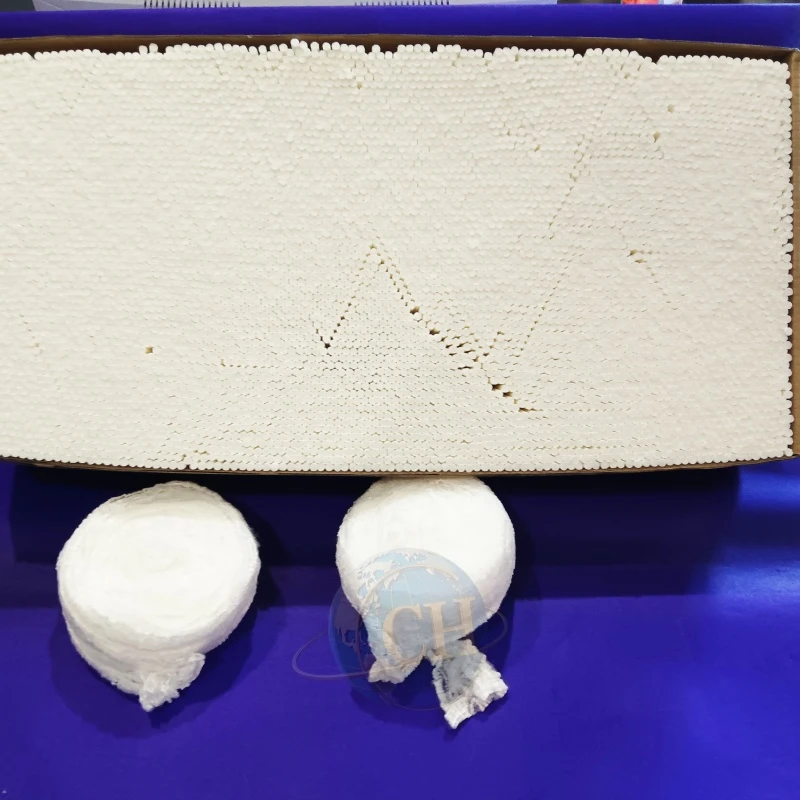

If you're interested in our Cellulose Acetate Tow products or want to learn more about how blowing agents can be optimized for your specific needs, don't hesitate to reach out. Whether you're a cigarette manufacturer looking for high - quality filter materials or involved in other industries where porous cellulose acetate is useful, we're here to help. Just contact us for more details and let's start a discussion about your procurement requirements.
References
- Smith, J. (2018). "The Science of Cellulose Acetate in Filter Manufacturing". Journal of Material Science.
- Brown, A. (2020). "Blowing Agents and Their Applications in Polymer Processing". Polymer Review.
- Green, C. (2019). "Properties of Cellulose Acetate and Its Derivatives". Biomaterials Research.